
South Korea’s AI Ambitions Spark Urgent Power Grid Rethink
South Korea’s AI Ambitions Spark Urgent Power Grid Rethink
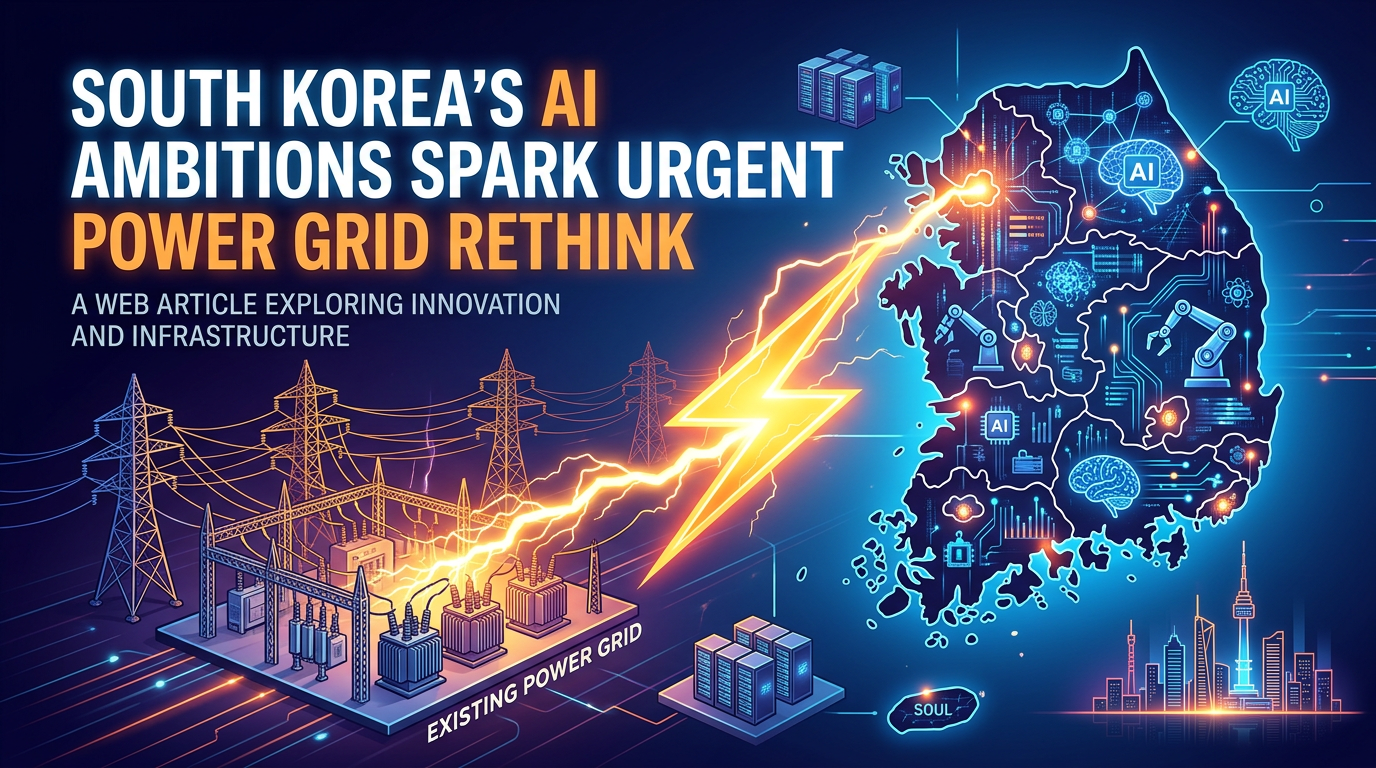
Growing demand from artificial intelligence data centres and next-generation semiconductor facilities is forcing South Korea to confront a fundamental question: can its power infrastructure keep pace with its digital ambitions?
South Korea’s race to establish itself as a global leader in artificial intelligence and advanced chip manufacturing is placing unprecedented pressure on the nation’s electricity network. Energy specialists are now urging policymakers to revisit long-term power forecasts, warning that projected electricity demand from major technology projects could significantly outstrip existing assumptions.
The concerns emerge as Seoul prepares its next national electricity supply strategy while simultaneously advancing large-scale investments in AI infrastructure, semiconductor production and other high-tech industries.
AI and Chip Manufacturing Drive New Energy Challenge
Government-backed plans currently include AI data centre projects with a combined capacity of 18.4 gigawatts, alongside four new semiconductor fabrication facilities expected to require an additional 6.3 gigawatts of power.
If these facilities operate continuously, as most advanced AI and chip manufacturing sites are designed to do, annual electricity consumption could reach approximately 216 terawatt-hours. Industry analysts note that AI data centres alone could account for more than 160 terawatt-hours annually, while semiconductor fabs would consume over 55 terawatt-hours.
The scale of that demand is striking. It exceeds the total increase in electricity consumption anticipated under South Korea’s current long-term energy framework covering the period between 2024 and 2038.
The figures highlight how rapidly the AI boom is reshaping assumptions about energy use. While data centres have long been major consumers of electricity, the rise of generative AI and large language models has accelerated infrastructure requirements. Training and running advanced AI systems requires vast numbers of high-performance processors operating around the clock, creating substantial and continuous power demand.
Existing Forecasts May Already Be Outdated
Energy experts argue that previous demand projections failed to fully anticipate the pace of AI adoption, semiconductor expansion and broader electrification trends.
According to academics and industry specialists, the government’s upcoming 12th Basic Plan for Long-Term Electricity Supply and Demand should begin with a fresh assessment of future consumption patterns rather than relying heavily on assumptions made under earlier frameworks.
The challenge extends beyond simple generation capacity. Modern AI facilities and semiconductor plants require highly reliable electricity supplies with minimal interruptions. Even brief outages can result in significant operational and financial consequences, particularly within semiconductor manufacturing environments where production processes run continuously.
As a result, planners must consider not only how much electricity will be needed but also how to guarantee stable supply throughout the year.
Nuclear Power Moves Back to Centre Stage
The debate is also reopening questions about South Korea’s future energy mix.
Several experts believe nuclear power will play an increasingly important role as the country retires ageing coal-fired generation facilities. While renewable energy continues to expand, critics argue that solar and wind alone may struggle to provide the consistent baseload power required by energy-intensive AI campuses and semiconductor clusters.
Some analysts have suggested maintaining existing thermal power stations longer than originally planned if replacement generation and transmission infrastructure fail to arrive on schedule. Others have proposed additional nuclear reactor construction to support long-term industrial growth.
Supporters of nuclear expansion argue that the technology offers high-capacity, low-carbon electricity generation capable of operating continuously, characteristics that align closely with the requirements of data centres and advanced manufacturing facilities.
Global Technology Trend Creates New Pressure
South Korea is not alone in facing this challenge. Countries around the world are reassessing electricity needs as AI infrastructure investment accelerates.
Major technology companies in the United States, Europe and Asia are investing billions in new data centre developments, prompting renewed discussions about grid capacity, energy security and sustainable power generation. The growing adoption of electric vehicles, industrial electrification and cloud computing is adding further strain to national power systems.
For South Korea, however, the issue is particularly significant given the strategic importance of its semiconductor sector. The country is home to some of the world’s largest memory chip manufacturers and regards advanced semiconductor production as a cornerstone of future economic competitiveness.
Balancing Growth and Energy Security
The emerging consensus among energy specialists is that South Korea’s digital transformation cannot be separated from its energy strategy.
AI data centres, semiconductor manufacturing facilities and other advanced industries represent major opportunities for economic growth and technological leadership. Yet they also require enormous amounts of dependable electricity, creating challenges that extend far beyond the technology sector itself.
As policymakers prepare the next national power plan, the debate is likely to focus on how best to balance industrial expansion, energy security, affordability and decarbonisation goals.
What is clear is that the AI era is rapidly becoming an energy story as much as a technology story, and South Korea may be one of the first nations forced to redesign its power strategy around the realities of an increasingly electrified digital economy.